
Gold and silver are expected to remain volatile with a corrective bias as investors assess the latest flare-up in the US-Iran conflict, movements in crude oil prices, and inflation data, which could reshape expectations for global interest rates, according to analysts.

The Indian government has introduced a 0.4% transaction fee on Unified Payments Interface (UPI) payments exceeding Rs 2,000 for merchants, effective October 15, marking the end of nearly six years of free service. Person-to-person transfers and small-value transactions below Rs 2,000 remain free. The new Merchant Discount Rate (MDR) is capped at Rs 300 for transactions above Rs 75,000, with differentiated rates for essential sectors and investments, and safeguards to prevent costs from being passed to consumers.

India's banking system liquidity has fallen into a deficit for the first time in nearly three months, prompting the Reserve Bank of India (RBI) to inject 1.41 trillion through a seven-day variable rate repo (VRR) auction to ease the temporary tightness.

Former Chief Economic Adviser Krishnamurthy V Subramanian outlines India's strategy to become a USD 55 trillion economy by 2047. The plan hinges on leveraging its young demographic in AI, dominating sunrise sectors like space and defence tech, attracting FDI, and achieving sustained 8% GDP growth.
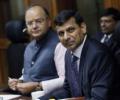
RBI Governor Raghuram Rajan has been pursuing hawkish monetary policy stance to keep inflation under check.

For India, the goal is not simply to host another grand diplomatic gathering. It is to prove that a diverse coalition of emerging powers can still deliver.

Indian benchmark indices, Sensex and Nifty, saw early gains driven by lower crude oil prices and buying in Reliance Industries, even as the Reserve Bank of India maintained its benchmark policy rate for the fourth consecutive meeting, reinforcing confidence in the domestic economy.

RBI Governor flayed easy monetary policy of central banks in advanced economies saying it is "more cause than medicine".
The Monetary Policy Committee (MPC) is expected to maintain the status quo on policy rates for the fourth consecutive time in its October 4-6 review meeting. The incremental information available since its last meeting in August suggests that growth and inflation prints for the second quarter (Q2) of financial year 2023-24 (FY24) will exceed the committee's projections. However, the Consumer Price Index (CPI)-based inflation is expected to moderate in the second half (H2) of FY24.

Indian benchmark indices Sensex and Nifty closed marginally lower due to profit-taking, following the Reserve Bank of India's decision to keep the repo rate unchanged while lowering its growth expectations for the current fiscal year and forecasting higher inflation.

The Indian government has introduced a 0.4% Merchant Discount Rate (MDR) on UPI person-to-merchant (P2M) transactions exceeding Rs 2,000, effective October 15. This move ends nearly six years of fully free UPI payments, though person-to-person (P2P) transfers and small P2M payments remain free. The charges aim to bolster investment in UPI infrastructure, with specific exemptions and caps for essential sectors.

Reserve Bank of India (RBI) Governor Sanjay Malhotra stated that preventing second-round effects of supply shocks, where inflation expectations rise due to prolonged disruptions, is the primary role of monetary policy. He also defended the RBI's foreign exchange market interventions, asserting it did not commit to an 'indefensible peg'.

India and China are in what experts call 'a cooperation-versus-competition situation'.

Highlights of the third quarter review of the monetary
Post workers are collecting data that determines the level of India's consumer price index, which is likely to become RBI's most important tool for setting monetary policy.

The Insurance Regulatory and Development Authority of India (Irdai) has proposed a phased reduction in the expenses of management (EoM) limits for insurers, aiming to lower the overall cost of insurance and enhance returns for policyholders. The proposals also include a new framework for commissions, stricter measures against mis-selling, and mandatory cost audits.

The Supreme Court has refused to grant an interim stay on the imposition of Merchant Discount Rate (MDR) on UPI person-to-merchant transactions exceeding Rs 2,000, which is set to take effect from October 15. The court has agreed to examine the challenge to this new fee and has issued notices to the Centre, RBI, and NPCI, seeking their responses within four weeks. A Public Interest Litigation (PIL) argues that the levy lacks statutory safeguards, transparency, and public consultation, and could adversely affect merchants and consumers.

Raghuram Rajan, who was Chief Economic Advisor in the Finance Ministry before taking over as RBI Governor on September 4, is scheduled to announce the next mid-quarter policy review on December 18.

Experts said a future rate cut would depend on the inflation.

The Unified Payments Interface (UPI) has completed a decade since its launch, becoming the backbone of India's digital payments ecosystem. It has seen exponential growth in transaction volume and value, expanding financial inclusion and setting a global benchmark for real-time payments.

Markets will look for clear guidance on how the MPC interprets the uncertainty and what it implies for the future course of monetary policy, points out Rajeswari Sengupta.

BRICS members have expressed 'serious concerns' over the unilateral imposition of trade and finance-related measures, including higher tariffs and non-tariff barriers, stating these actions distort trade and are inconsistent with WTO rules. The grouping also highlighted elevated risks to the global economic outlook due to geopolitical tensions, trade fragmentation, and protectionism.
Uncertainties stemming from the West Asia crisis and its potential impact on inflation and economic growth were key factors in the Reserve Bank of India's Monetary Policy Committee (MPC) decision to maintain the status quo on interest rates, according to the recently released MPC meeting minutes.

The year 2022 saw the Reserve Bank of India (RBI) start acting on the policy repo rate after a gap of two years. The six-member monetary policy committee of the RBI reduced interest rate sharply - by 115 bps - when Covid-19 struck in 2020. In March 2020, days after the nationwide lockdown was announced, MPC in an unscheduled meeting reduced the repo rate by 75 bps, followed by another 40 bps in May. Status quo was maintained for the next two years since the May repo rate hike.

Moody's Analytics predicts India will remain the fastest-growing major economy in 2026 and 2027, but its pace will moderate due to a global slowdown, geopolitical risks, and financial market volatility, despite the boost from AI demand.

India's wholesale price inflation (WPI) increased to 9.87 per cent in June, up from 9.68 per cent in May, primarily due to significant price increases in non-food and food products, with food inflation alone rising to 5.49 per cent.
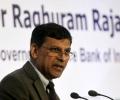
We may now be experiencing the darker side of the massive monetary stimulus of past years, said Rajan.
Indian stock market indices closed on a mixed note, with the Sensex gaining 374 points driven by buying in Reliance Industries and ICICI Bank, while the Nifty remained flat. This divergence is attributed to a new Closing Auction Session (CAS) mechanism introduced by stock exchanges, impacting market liquidity and price discovery.
The Reserve Bank of India (RBI) has opted to keep its key interest rates unchanged at 5.25%, anticipating a global economic recovery following a ceasefire in the US/Israel-Iran conflict, despite ongoing inflationary pressures and currency fluctuations.

'I don't think the government will sacrifice such a fine institution for monetary gains.'

Indian benchmark indices Sensex and Nifty surged in early trade, driven by a rally in IT stocks and tempered expectations of US Federal Reserve monetary tightening following softer-than-expected US jobs data. Track Sensex, Nifty on July 3.

"Our endeavour is to bring headline inflation in line with the target over the medium term," said RBI Governor Sanjay Malhotra, addressing concerns about the central bank's policy stance and economic outlook.
Indian benchmark equity indices, Sensex and Nifty, extended their winning streak for a third consecutive day, driven by a rally in IT stocks and global cues suggesting a more accommodative monetary policy after softer-than-expected US jobs data.

The truth is the government and the Reserve Bank enjoy a free, frank and cordial relationship.
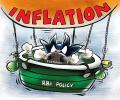
The Indian government has extended the Reserve Bank of India's (RBI) mandate to maintain retail inflation at 4 per cent, with a tolerance band of 2 per cent on either side, for another five years until March 2031.

The Reserve Bank of India's proposal to allow non-banking financial companies (NBFCs) access to the term money market is projected to significantly increase market volumes by 40-60 per cent in the first year, potentially doubling turnover within two to three years, according to treasury executives.

The Reserve Bank of India (RBI) Governor Sanjay Malhotra is now confronting the classic growth-inflation tradeoff, a situation exacerbated by the West Asia war, which threatens to end the 'goldilocks period' of low inflation and robust growth.

The Reserve Bank of India (RBI) has prematurely closed its swap facility for foreign currency non-resident (bank) deposits, FCNR(B), one month ahead of schedule, after banks mobilised $52.3 billion under the scheme by August 13, indicating sufficient foreign currency reserves.

'After that the burdens of an ageing population will be upon us, and the share of working age population will shrink.'
The Reserve Bank of India hiked key interest rates by 0.25 per cent each in the last two reviews to tame inflation.
